Blog Post
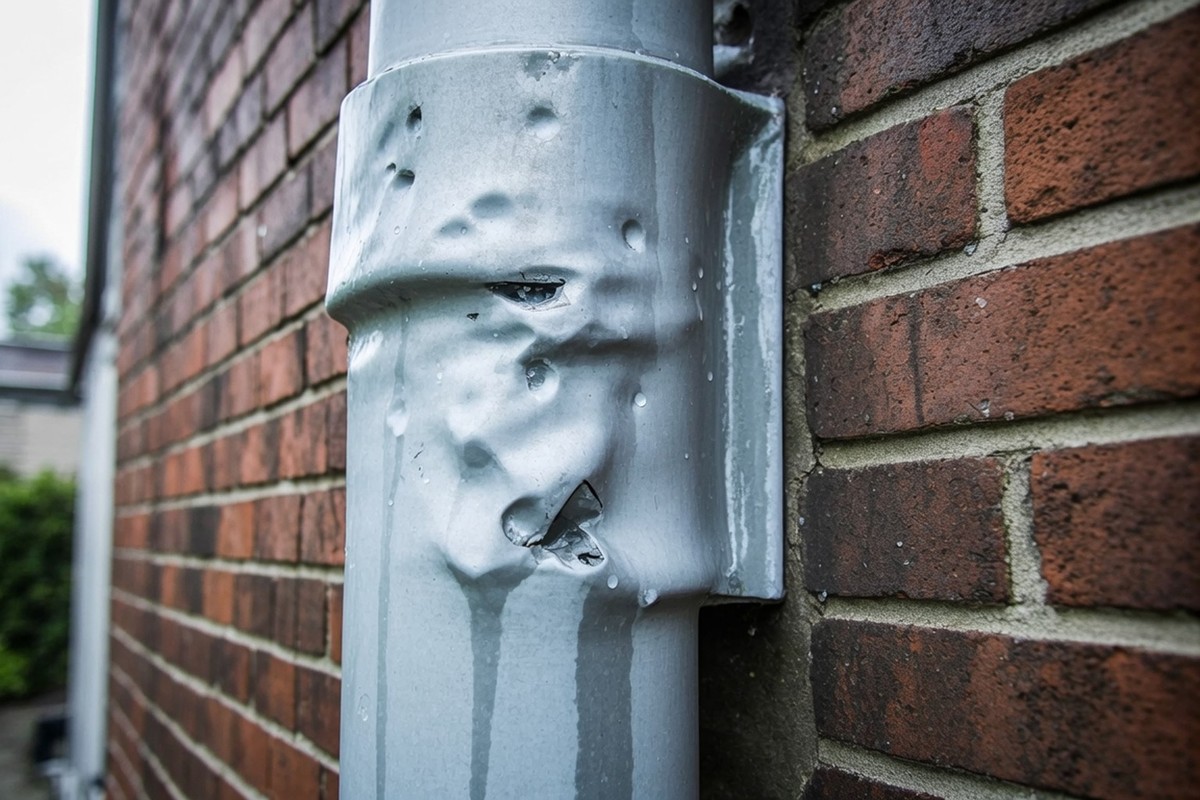
How Downspout Hail Damage Affects Drainage (and What to Do)
After a strong hailstorm rolls through central Delaware, most homeowners rush outside to inspect their roof and siding. The gutters and downspouts, however, often get overlooked, even though they take a serious beating. Downspout hail damage is one of those quiet problems that does not announce itself right away, yet it can quietly undermine your home's entire drainage system in the weeks and months that follow. If you suspect your gutters took a hit, a trusted damage restoration company in Dover, DE can help you understand what you are dealing with before small issues grow into costly repairs.
The challenge with hail is that it rarely leaves a single obvious hole. Instead, it produces a pattern of dents, dings, and weak spots that change how water flows off your roof. Over time, those imperfections add up, and the drainage path that once kept your foundation dry begins to work against you. Understanding how this happens is the first step toward protecting your home.
Why Downspouts Matter More Than You Think
Your downspouts are the final stage in a carefully engineered system designed to carry rainwater away from your roof, walls, and foundation. When they function properly, water travels from the roof into the gutters, down through the spouts, and safely away from the house. When they are compromised, that controlled path breaks down, and water starts collecting in places it should never reach.
Hail can crush the smooth interior walls of a downspout, creating dents that disrupt the flow and trap debris. Even a seemingly minor dent narrows the channel, which slows drainage during heavy rain. When water cannot move quickly enough, it backs up into the gutters, spills over the edges, and pours directly against your siding and foundation. That is where the real trouble begins.
How Hail Damage Disrupts Proper Drainage
Downspout hail damage affects drainage in several connected ways, and most of them involve water going where it was never meant to go. The most immediate issue is reduced capacity. A dented or partially crushed downspout simply cannot carry the same volume of water it was designed to handle, so during the next storm the system overflows.
A second problem is pooling near the foundation. When downspouts are dented at the elbow or near the ground, water often dribbles out at the base instead of being directed away from the house. That water saturates the soil around your foundation, and in Delaware's freeze and thaw cycles, saturated soil can crack foundation walls and open the door to basement moisture. Persistent moisture against the foundation is one of the leading causes of the kind of intrusion that eventually requires water damage restoration in Dover, DE.
There is also the hidden issue of rust and corrosion. Hail strips protective coatings off metal downspouts, and those bare spots begin to rust. Rust weakens the metal, widens tiny cracks, and eventually leads to leaks at the seams. A downspout that looked fine right after a storm can start failing months later, which is why damage caught early is so much easier to manage.
Warning Signs Your Downspouts Took a Hit
Spotting downspout hail damage does not require climbing a ladder in most cases. Much of what you need to see is visible from the ground if you know what to look for. After a storm, walk the perimeter of your home and pay attention to the details that tend to reveal trouble.
- Visible dents, dimples, or creases running along the length of the downspout or at the elbows.
- Water spilling over gutter edges during rain rather than flowing smoothly through the spouts.
- Pooling water, mud splashes, or eroded soil near the base of the downspout and foundation.
- Paint chips, flaking, or small rust spots where hail stripped the protective coating.
- Loose fasteners or sections that have pulled away from the house after impact.
If you notice any of these signs, it is worth documenting them with photos. Clear images taken soon after the storm can be valuable if you decide to file an insurance claim, and they give a restoration professional a useful reference point during an inspection.
The Ripple Effect on Your Home
What makes downspout hail damage so frustrating is how a small problem spreads. Overflowing gutters do not just stay at the gutter line. Water that cannot drain properly runs down fascia boards and soffits, where it rots wood and invites pests. It seeps behind siding, where trapped moisture encourages mold growth inside wall cavities. It pools at the foundation, where it works its way into basements and crawl spaces.
Mold, in particular, is an underrated consequence of poor drainage. When moisture lingers in dark, enclosed spaces, it creates ideal conditions for growth that can affect both your home's structure and your family's air quality. Addressing drainage issues early helps you avoid the more involved process of mold remediation in the Dover area down the road. In short, a dented downspout is rarely just a dented downspout. It is often the first link in a chain that ends with far more expensive repairs.
What to Do After Hail Damages Your Downspouts
The good news is that acting quickly can stop most of these problems before they escalate. Start by clearing any debris from your gutters and downspouts so you can see whether water is draining freely. Run a hose through the system and watch for slow flow, leaks at seams, or water escaping through dented sections. These simple tests often reveal damage that is not obvious from a visual inspection alone.
Next, assess whether the damage is cosmetic or functional. Light surface dents that do not affect flow may be a lower priority, though you should still monitor them for rust. Dents that restrict water movement, cracked seams, and sections pulling away from the house call for prompt attention. If you are unsure, having a professional evaluate the system removes the guesswork and helps you prioritize repairs that genuinely protect your home.
Finally, do not overlook the connection between your downspouts and the rest of your storm recovery. Hail that dented your gutters likely affected your roof and siding too, so a broader inspection is often worthwhile. Our team handles comprehensive storm damage restoration in Camden and beyond, which means we can look at the full picture rather than treating one symptom in isolation. That kind of complete assessment is especially valuable for homeowners throughout Dover and the surrounding areas who want confidence that no hidden damage was missed.
Protecting Your Home Before the Next Storm
Prevention goes a long way once repairs are complete. Keeping gutters clean, replacing damaged sections promptly, and adding downspout extensions that carry water several feet from the foundation all reduce your risk during the next round of severe weather. Delaware sees its share of intense storms, and a drainage system in good condition is one of the best defenses you have against water intrusion.
Downspout hail damage may seem minor compared to a cracked roof or shattered window, but its effect on drainage can be surprisingly serious over time. By inspecting your system after storms, recognizing the warning signs, and addressing problems early, you protect your foundation, your walls, and your peace of mind. When you want an expert eye on the situation, reach out to our team for an inspection and let us help you keep water flowing where it belongs, safely away from your home.